 Free Standard Shipping
 Pay Later with Klarna
 30-Day Easy Returns
 Good Housekeeping Award Winner





You have done the hard bit. You showed up, you pushed through and now you are standing in the kitchen wondering what to drink. The fridge is there. The fruit is there. And yet somehow the default is still a bright blue bottle with an ingredients list that takes a long while to read.
It doesn't need to be that complicated. A few fresh ingredients, a juicer and about five minutes gets you something that tastes better, works just as well and doesn't come with a side of artificial sweetener. This guide covers the ingredients worth knowing, why fresh juice is the ideal recovery drink and five recipes worth making on repeat to keep up with your workout routine.
The Best Ingredients for a Post-Workout Recovery Drink
You don't need a degree in sports nutrition to stock a useful shelf. These are the ingredients that actually pull their weight, and that you can use again and again.
- Tart cherry juice: Probably the most well-researched ingredient on this list. The compounds that give it that deep red colour help reduce inflammation and muscle soreness after training , as demonstrated in research on tart cherry juice and post-exercise recovery.
- Coconut water: Lighter than fruit juice and naturally packed with potassium and magnesium. It works well as a base on its own or mixed with fresh juice, and it is easy to digest, too.
- Beetroot: Popular with endurance athletes for a reason. It contains dietary nitrates that your body converts to nitric oxide, which research shows supports blood flow and reduces the oxygen cost of exercise. Most people use it before training, but it is great as a recovery drink too.
- Ginger: A quiet anti-inflammatory. With just a small piece, it can balance out the sweetness in fruit-heavy recipes without taking over.
- Citrus: Lemon, lime and orange all pull double duty. They sharpen the flavour of almost any combination and contribute to electrolyte balance alongside sea salt. A squeeze of lemon is rarely a bad idea.
-
Sea salt: That’s the one people skip and then wonder why their drink tastes flat and doesn't quite hit the spot. A small pinch is all it takes. It won't make your juice taste salty; it just makes everything work a bit better.
What You Need to Make These Drinks at Home

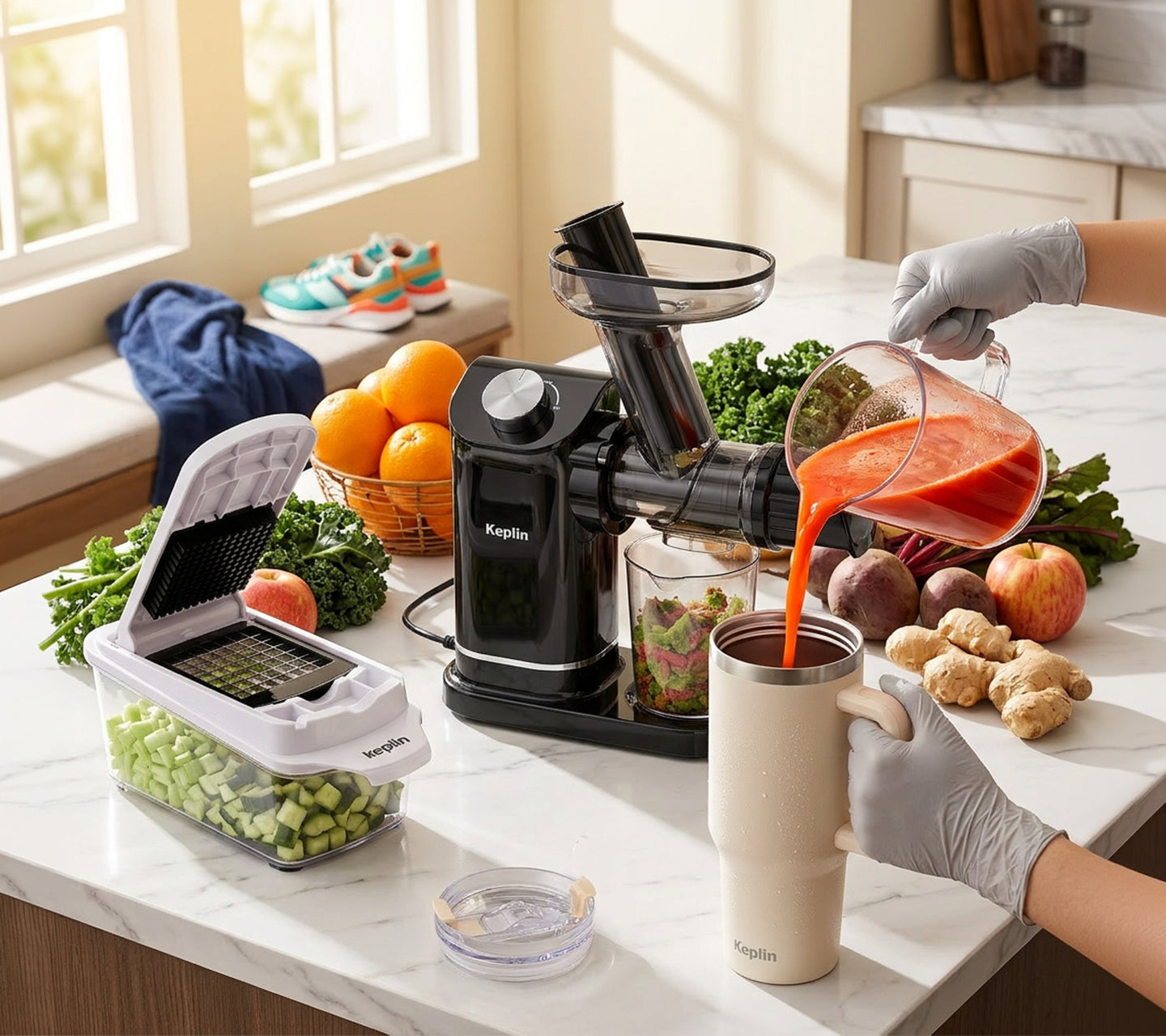
If you are making juice regularly, the appliance you use makes a genuine difference. A centrifugal juicer gets the job done but generates heat in the process, which breaks down some of the nutrients before they even hit the glass. A cold press juicer works more slowly and keeps more of the good stuff intact. If leafy greens or beetroot are a regular part of your recipes, the difference in taste is hard to ignore. The Keplin Cold Press Juicer handles kale and celery without leaving half of it in the pulp bin, which is more than can be said for most high-speed models.

Prep is the other thing worth sorting. After a hard workout, you may not want to get the chopping board out and cut vegetables and fruit for twenty minutes. The Keplin 11-in-1 vegetable chopper speeds that up considerably and keeps everything a consistent size, which matters when you are tired and just want to get on with it. Once you have made a batch, keep it cold. No one wants a lukewarm juice.
For everything you need to get started, the kitchen appliances range covers all the kit in one place.
5 Post-Workout Juice Recipes Worth Making on Repeat
1. Cherry and Beetroot Recovery Juice

This is the one to reach for after a hard cardio session, a long run or a tough cycling ride. Tart cherry juice is well established as a recovery tool and beetroot adds depth along with its circulation-supporting nitrates.
Ingredients (makes 1 large serving)
- 2 medium beetroots, scrubbed and roughly chopped
- 150ml tart cherry juice
- 1 large apple
- 1cm fresh ginger
- Juice of half a lemon
- Pinch of sea salt
Method: Juice the beetroot, apple and ginger. Stir in the tart cherry juice, lemon juice and salt. Serve over ice or straight from the fridge.
2. Green Citrus Recharge

This is a lighter recovery option. Clean, sharp and full of nutrients when your stomach is still settling after a tough workout.
Ingredients (makes 1 large serving)
- 3 stalks celery
- 1 green apple
- Half a cucumber
- Large handful of kale or spinach
- Juice of 1 lime
- 200ml coconut water
- Pinch of sea salt
Method: Feed the celery through first to clear the juicer, then add the kale, apple and cucumber in that order. Stir through the coconut water, lime juice and salt.
3. Tropical Electrolyte Boost

Pineapple and orange bring quick-release carbohydrates and a good hit of potassium. This one works particularly well after a session that mixed cardio and resistance work.
Ingredients (makes 1 large serving)
- 200g fresh pineapple, chopped
- 1 large orange
- 1 tsp honey
- 200ml coconut water
- Juice of half a lime
- Pinch of sea salt
Method: Juice the pineapple and orange. Stir through the coconut water, lime juice, honey and salt. Serve cold.
4. Watermelon and Mint Hydrator

The simplest of the five and possibly the most refreshing. Watermelon is made of about 92% water and contains L-citrulline, an amino acid linked in studies to reduced muscle soreness and improved recovery. It is also the most hydrating of the five, which makes it the right call on hotter days or after outdoor sessions.
Ingredients (makes 1-2 servings)
- Large wedge of watermelon (roughly 400g flesh), cubed
- Juice of 1 lemon
- Small handful of fresh mint
- Pinch of sea salt
- Splash of coconut water if you want more volume
Method: Juice the watermelon and mint. Stir through the lemon juice, salt and coconut water. Serve over ice.
5. Carrot, Orange and Turmeric Glow

Perfect as a recovery drink after resistance or strength sessions. Carrot is rich in beta-carotene, which helps combat oxidative stress caused by intense training. Turmeric's active compound, curcumin, is well established in clinical research as an anti-inflammatory.
Ingredients (makes 1 large serving)
- 3 large carrots, scrubbed
- 2 oranges, peeled
- 1cm fresh turmeric (or half a tsp ground turmeric)
- 1cm fresh ginger
- Juice of half a lemon
- Tiny pinch of black pepper
- Pinch of sea salt
Method: Juice the carrots, oranges, turmeric and ginger together. Stir through the lemon juice, black pepper and salt. Serve straight or over ice.
Quick Tips to Get the Most from Your Recovery

- Check the label, always. Tart cherry and pomegranate juices are the worst offenders for being diluted or quietly sweetened. If it is not 100% juice, it is not doing the same job.
- Don't skip the salt. It sounds wrong but a small pinch of sea salt genuinely transforms these recipes. It doesn't make them taste salty, it just upgrades every flavour and brings the electrolyte balance closer to what your body actually needs.
- Drink it while it counts. Your muscles absorb glycogen most efficiently in the two hours after training. You don't need to sprint to the kitchen but leaving it until dinner isn't ideal either.
- Make it the night before and keep it cold. A vacuum-insulated tumbler will keep your drink cold for hours. Prep it before you leave, bring it with you and it'll be waiting for you exactly as you made it.
- Match the recovery recipe to the session. Harder effort means more glycogen depletion. The tropical or cherry recipes suit that better. After something moderate, the green or watermelon options are plenty.
-
Batch and freeze when life gets busy. Make a big batch at the weekend and pour it into silicone ice cube trays. Drop four or five cubes into your tumbler before you head out and they'll have thawed by the time you need them. No prep on a tired Tuesday, no waste.


