 Free Standard Shipping
 Pay Later with Klarna
 30-Day Easy Returns
 Good Housekeeping Award Winner




This article is written by the Keplin Editorial Team for informational purposes only and does not constitute medical advice. For guidance on skin cancer risk, SPF selection for your skin type, or any skin health concerns, please speak with your GP or a qualified dermatologist.
Most of us wait for months for summer and then when it finally arrives you spend the first sunny afternoon getting mildly sunburnt in the garden while convinced it "wasn't even that hot." The sun here may not have the ferocity of a Mediterranean July, but don't be fooled. UV rays don't care that you're in Dorset rather than Dubrovnik.
Protecting your skin from the sun in summer is about more than slapping on factor 30 and hoping for the best. It's about building a few sensible sun protection habits: understanding when UV levels are highest, how to get shade that works and which products belong in your outdoor kit.
Why UV Damage Is More Serious Than You Think

The UV index in the UK climbs from March onwards and stays high enough to cause real damage on clear days right through to October. That includes days where it feels perfectly mild. UV rays don't distinguish between a beach holiday and a sandwich eaten outside at lunch.
There are two types of UV ray worth knowing about. UVB is the one that burns. UVA penetrates deeper and is linked to premature ageing. Both types are associated with skin ageing and skin cancer, so broad-spectrum protection that covers both is what you're looking for.
Heat also changes your skin's behaviour in ways that go beyond burning. Humidity and warmth increase oil production, which can lead to blocked pores and breakouts. Your moisturiser might feel heavier than usual in summer and that's because it is. Swapping to a lightweight, gel-based formula during the warmer months can make a noticeable difference.
The practical takeaway: chase the shade and treat SPF as a daily non-negotiable from spring through early autumn, not just something you dig out for holidays.
Garden Parasols: The Most Underrated Sun Protection

One of the simplest things you can do for your skin in summer is reduce how much direct sun it sees in the first place. That sounds obvious, but the habit most people skip is building shade into their setup rather than relying entirely on sunscreen reapplication.
The sun is at its strongest and most damaging between 11am and 3pm in the UK, so finding cover during those hours is one of the most effective things you can do. That applies whether you're gardening, reading in the garden or just sitting outside with a coffee.
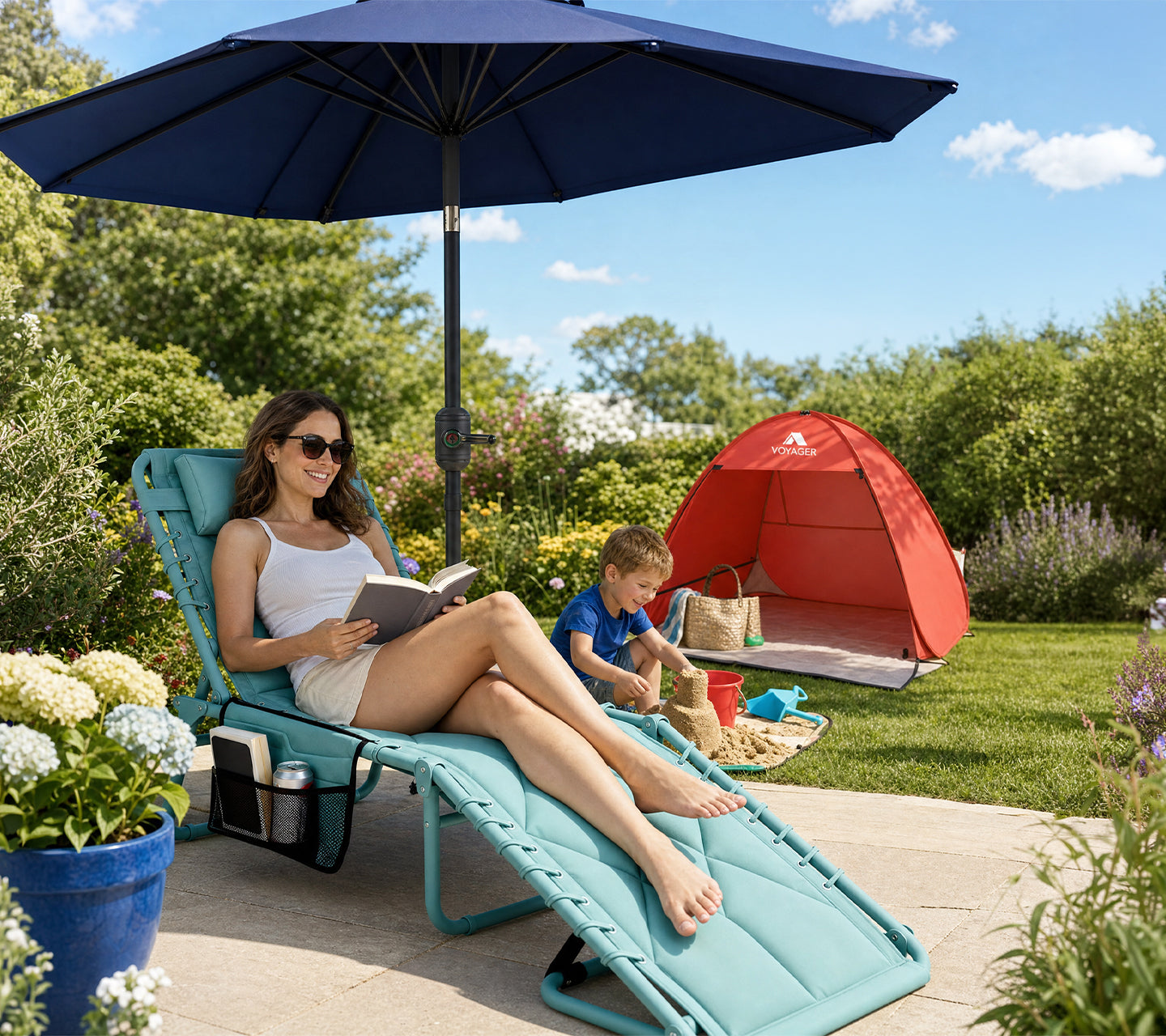
A good garden parasol is genuinely one of the more underrated bits of sun protection you own. It creates consistent shade without you having to think about it, and it frees you up to enjoy being outside rather than constantly shuffling your chair.
The Tilting Garden Parasol with Cover 2m, 6 Ribs, 180gsm is a solid choice if you have a smaller patio or terrace. The tilt mechanism is the key feature here. Being able to angle the canopy means you follow the sun's movement through the day rather than sitting in a strip of shade that disappears by 2pm. The 180gsm fabric gives decent coverage and the included cover means it won't look miserable by August. For larger outdoor spaces, or if you want to cover a dining table and a couple of chairs, a bigger canopy gives you far more useful shade.
When it comes to sun protection, canopy fabric matters. Look for a UPF rating: UPF 50+ means less than 2% of UV radiation passes through. Darker shades like charcoal, navy and taupe absorb more UV than white or pale beige, so colour is not just aesthetic.
SPF: What Most People Get Wrong and How to Fix It

Sunscreen is the foundation of summer skin care. Most people know this. Fewer people apply it correctly. SPF should be reapplied every two hours, and a spray formula works particularly well for topping up over makeup or when you've been active in the garden. A single morning application before you head outside isn't doing much by lunchtime, especially if you've been sweating or swimming.
The NHS recommends a minimum of SPF 30 and applying 6 to 8 teaspoons if you are covering your full body. Most people apply a fraction of that, which means the protection they are getting does not match the number on the bottle. SPF 30 is a floor not a ceiling if you have fair skin, lots of moles or a family history of skin cancer. Broad-spectrum sunscreen covering both UVA and UVB is essential, not optional.
One thing worth doing right now: check the expiry date on last year's bottle. The active ingredients in sunscreen deteriorate over time, and using an expired product may make the application completely ineffective.
One last tip: Even if you're just enjoying your outdoor setup for 30 minutes, don't forget the ears, the back of the neck and the tops of your feet. These are the areas that get caught out most often and they're also the ones that tend to be most uncomfortable when burned.
Sun Loungers: The Art of Relaxing Without Burning

Lying on a sun lounger is one of summer's great pleasures. It is also, slightly paradoxically, one of the scenarios where your skin care routine is most likely to fall apart. You get comfortable, you drift off, and suddenly it's been ninety minutes and one shoulder is significantly pinker than the other.
The solution is to keep everything you need within arm's reach. The Keplin Padded Folding Sun Loungers come with a side pouch, which is really useful for storing your sunscreen, lip balm, a water bottle and anything else you don't want baking on the ground beside you. It's a small thing but it removes the struggle of having to get up to reapply, which means you are far more likely to do it.
Position the lounger with shade access in mind. A nearby parasol you can angle over yourself during peak hours, combined with regular SPF reapplication, gives you a much more sensible setup than full sun all afternoon.
Beach Sun Protection: The Parts Most People Miss

The beach tends to be where sun protection is taken most seriously. It's also where the conditions are most demanding. Sand reflects UV, water reflects UV and the breeze means you often don't realise how much sun you're getting until you're back in the car.
Water-resistant, broad-spectrum SPF 50 is the minimum for a day at the beach, and you need to reapply after swimming or towelling off, not just every two hours from when you arrived. Reapply after every swim. It's annoying but it matters.
Having your own shade at the beach is a game-changer if you have young children or fair skin. The Keplin Pop-up beach tent creates an instant shaded zone. It sets up quickly and the UPF 50+ protection makes it a practical choice for families with young children.
The Tilting Beach Umbrella 1.6m with Carry Bag is another option that's easy to transport and straightforward to set up on the sand. The carry bag means it goes in alongside your towels and beach kit without any faff. The tilt lets you angle it as the sun moves, so you're not constantly readjusting your position to stay in the shadow. The tilt lets you angle it as the sun moves, so you are not constantly readjusting your position to stay in the shade.
4 Sun Protection Habits Worth Building Into Every Summer Day

Beyond the products and shade structures, a handful of simple habits will do a lot of the work for you.
Stay hydrated. Skin that's properly hydrated from the inside manages heat and sun exposure noticeably better. It sounds like generic wellness advice, but the difference is real. Keep water nearby whether you're in the garden or at the beach.
Wear a hat. A wide-brimmed hat protects your face, ears and the back of your neck, all of which are high-burn areas that sunscreen alone rarely covers adequately on a long day out. This is especially true for children.
Check your skin regularly. Look out for changes to moles or any new growths and report anything unusual to your GP promptly. Skin cancer is far more treatable when caught early.
Cover up during peak hours. Lightweight, loose-fitting natural fabrics like cotton let your skin breathe while providing an extra barrier from UV, and clothing with a UPF rating gives you additional measurable protection.
Good summer skin care isn't complicated. It's SPF, shade and hydration, done consistently, across the whole season rather than just on the days it looks sunny.
FAQs About Protecting Your Skin in Summer


