 Free Next Day Delivery
 Pay Later with Klarna
 30-Day Easy Returns
 Good Housekeeping Award Winner




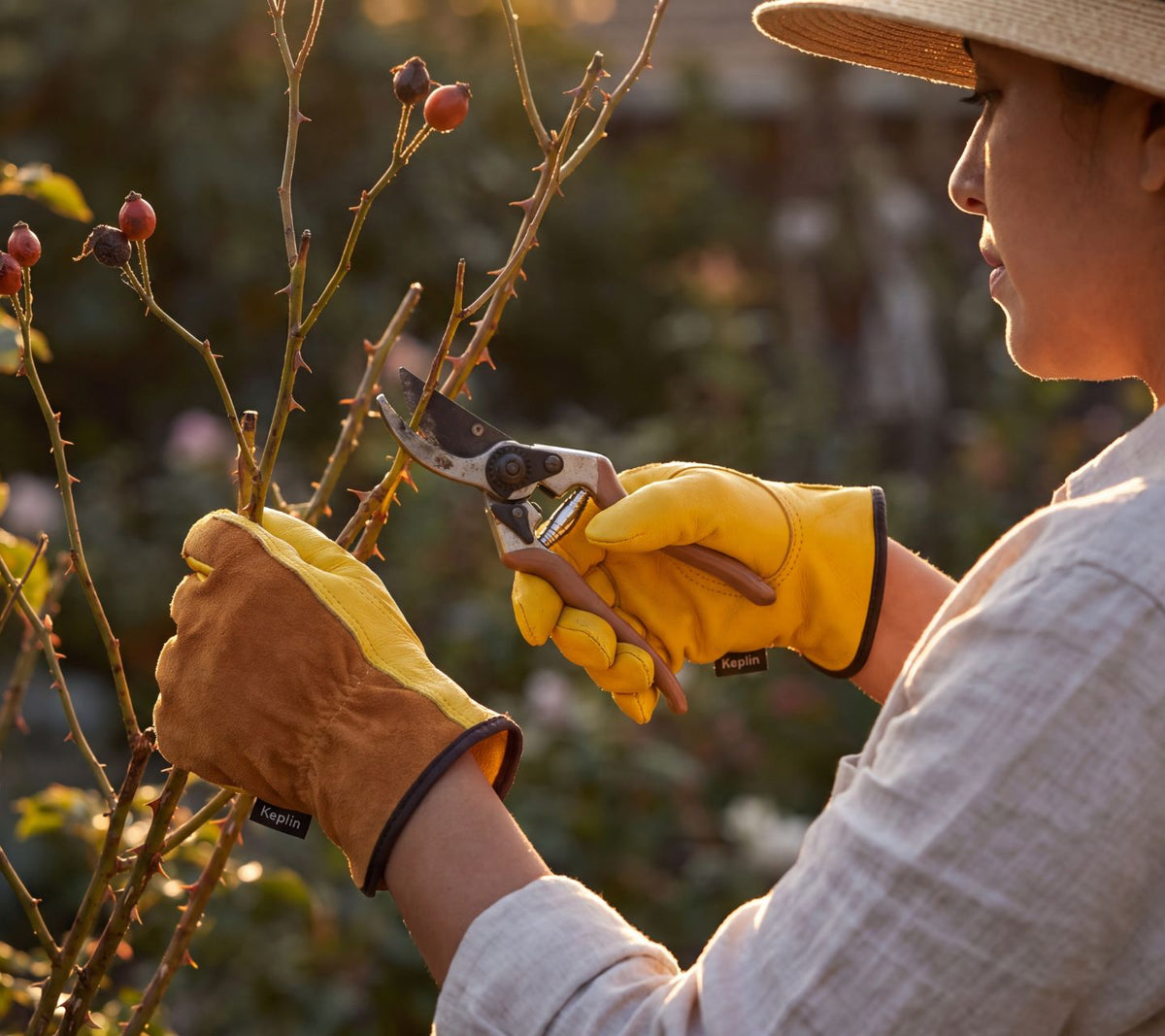
The right pair of leather gardening gloves is the difference between a satisfying hour outside and a week of picking splinters out of your thumb. Cheap fabric gloves tend to give up the moment they meet a bramble, a rose cane or a stubborn bit of weed. They also have a talent for going soggy just as the drizzle starts.
Leather works harder. It copes with thorns, grips your tools properly and gets more comfortable the more you wear it. Keplin, the UK garden and home brand, sells cowhide gloves in two styles, full leather and leather with a fabric back. This guide covers what makes a good pair, how those two compare and which winter garden jobs are worth tackling before the cold sets in.
Leather vs Fabric Gardening Gloves: Which Is Better?
Leather earns its place on the jobs that hurt. Pruning roses, hacking back brambles and clearing a patch of nettles all go better when you have something tougher than thin cotton between your palms and the plant.
Here is how different types of gloves compare:
| Feature | Fabric or rubber gloves | Leather gloves |
|---|---|---|
| Thorns and sharp edges | Little protection | Strong protection, the usual choice for roses and brambles |
| Durability | Wears through faster | Often lasts several seasons with regular care |
| Grip on tools | Rubber grips well, fabric can slip | Holds handles steadily |
| Wet weather | Rubber and coated pairs cope better | Not waterproof, can go stiff if soaked |
| Care | Usually replaced when worn | Lasts longer with a clean and a little oil |
Leather does have limits. It is not the best choice for fiddly jobs such as sowing seed or potting on seedlings, and it does not love being soaked. Keep a thin pair for delicate work and a leather pair for anything with thorns, tools or rough ground.
Full Leather or Leather and Fabric: Which Cowhide Gardening Gloves Suit You?

Keplin's two bright cowhide pairs look alike on the shelf but are built differently, so it is worth knowing which suits your jobs. Both are sold for gardening, with a non-slip grip and reinforced stitching, and both are resistant to abrasion, punctures and thorns.
- The Cowhide Leather Gardening Gloves are full leather, with cowhide on the palm and a double layer of cowhide on the back. That makes them the tougher choice for clearing brambles or handling rough timber. They come in small to extra-large and weigh around 140g.
- The Cowhide Leather Gardening Gloves Yellow & Green pair a leather palm with a fabric back. They are sold as long gloves and cut slightly longer, so they cover a little more of your wrist. The fabric back helps your hands breathe on a mild day. They weigh around 160g and come in medium and large.
Choose full leather for the roughest jobs and the widest range of sizes. Pick leather and fabric if you want a longer glove that stays comfortable on a milder day. Browse more in the gardening accessories and supplies collection.
How to Care for Leather Gardening Gloves

Leather lasts longer when you look after it, and the cleaning routine does not take long. Check your pair's label first for any specific care advice, then follow these steps.
- Brush off the dirt. Knock off loose soil by hand or with a soft brush. Hard bristles can damage the leather.
- Wipe them down. Work up a lather of saddle soap on a damp cloth and rub it into each glove, focusing on the grubbiest areas.
- Rinse lightly. Use a fresh damp cloth to remove the soap. The gloves should be damp, not soaked.
- Dry them flat. Lay them on a towel at room temperature, away from heat, and try them on once or twice as they dry to keep their shape. (Yes, the radiator looks tempting. Resist.)
- Condition them. Once they are completely dry, rub in a little leather oil to keep the leather supple.
Do this once or twice a season and the gloves will keep their shape and their grip.
Winter Garden Essentials to go with Your Gloves
Winter is the quiet window for jobs you never get round to in summer. Bare soil is a welcome mat for weeds, so cover a cleared bed with the Heavy Duty Weed Control Membrane and lay gravel or bark on top. Clear the ground first, pick out any sharp stones and overlap the joins by at least 100mm. A membrane that is not pegged down is a kite waiting for a windy night, so hold it in place with the Garden Stakes Weed Barrier Pegs. These galvanised steel pegs have a sharp tip for tough winter soil, and you need about one per metre around the edges and along any overlaps.
Kneeling on frozen soil is a hobby that does not stay fun for long, so add the Haltons Knee Pads 2 Pack. The high-density EVA foam padding and anti-slip outer grip keep them in place, and the slim, pull-on design can be worn under or over clothing.
How to Choose Leather Gardening Gloves
Run through a quick checklist before you buy: fit comes first, then think about the job. Thorns, brambles and heavy tools suit tough cowhide and a longer cuff, while sowing seed and delicate pruning suit a thinner pair. Leather on its own is not thermal or fully waterproof either, so a thin liner glove helps on frosty mornings and a little waterproofing wax helps on soggy ones.
Either pair makes a practical gift for the gardener who has everything except decent gloves. Browse the Garden & Outdoors collection when you are ready to order.


