 Free Standard Shipping
 Pay Later with Klarna
 30-Day Easy Returns
 Good Housekeeping Award Winner




September arrives and suddenly the garden looks different. The evenings close in earlier and the furniture sits unused for days at a stretch. Get ahead of the big patio clean-up now, before the worst of the rain and frost arrives. It's one of those small jobs that will save you a significant amount in the long run. Here's exactly what to do and in what order.
Step 1: Decide When You Should Start Covering Your Furniture
Earlier than most people think. October is when the UK's wettest period typically begins and UV exposure continues right through autumn and winter even on cold days. A south-facing patio in January is still receiving meaningful UV radiation, enough to fade fabric and bleach wood finishes over time. You don't need to wait for the first frost.
The honest answer is: cover your furniture when you stop using it regularly. For most UK gardens that means sometime in late September to mid-October. Consistent damp, which Britain does very well, causes as much damage as a single storm.
Worth knowing too: mice start looking for warm nesting spots in early autumn and will find their way into stored cushion fills and fabric. Getting cushions inside and frames covered before mid-October reduces this risk considerably. Nobody wants to uncover their garden furniture in April and find a family of mice have made themselves at home in the seat pad.
Step 2: Clean Everything Before You Cover It

Most people skip straight to the cover. Understandable, but it's the wrong order. Covering dirty furniture traps the problem rather than preventing it. Leaf debris, bird mess, damp soil and general grime left sitting under a cover through autumn and winter creates exactly the warm, wet conditions that mould and mildew need. By spring you'll have a bigger problem than if you'd left it uncovered entirely.
Wipe down hard surfaces with warm soapy water and a soft cloth. Avoid abrasive scourers or pressure washers on most materials, as these strip protective finishes rather than cleaning them. For rattan, work into the weave gently to lift any debris that's settled in. For wood, a damp cloth and a proper hardwood cleaner does the job without opening up the grain to moisture.
Cushions need separate attention. Take them off the furniture, brush off any loose dirt and wash the covers according to their care label. The crucial part: make sure they are completely dry before you store them. Even a small amount of trapped moisture turns into mould inside a storage bag by Christmas. Store cushions separately from the frames in a dry spot, ideally off the floor.
Step 3: Pick the Right Material
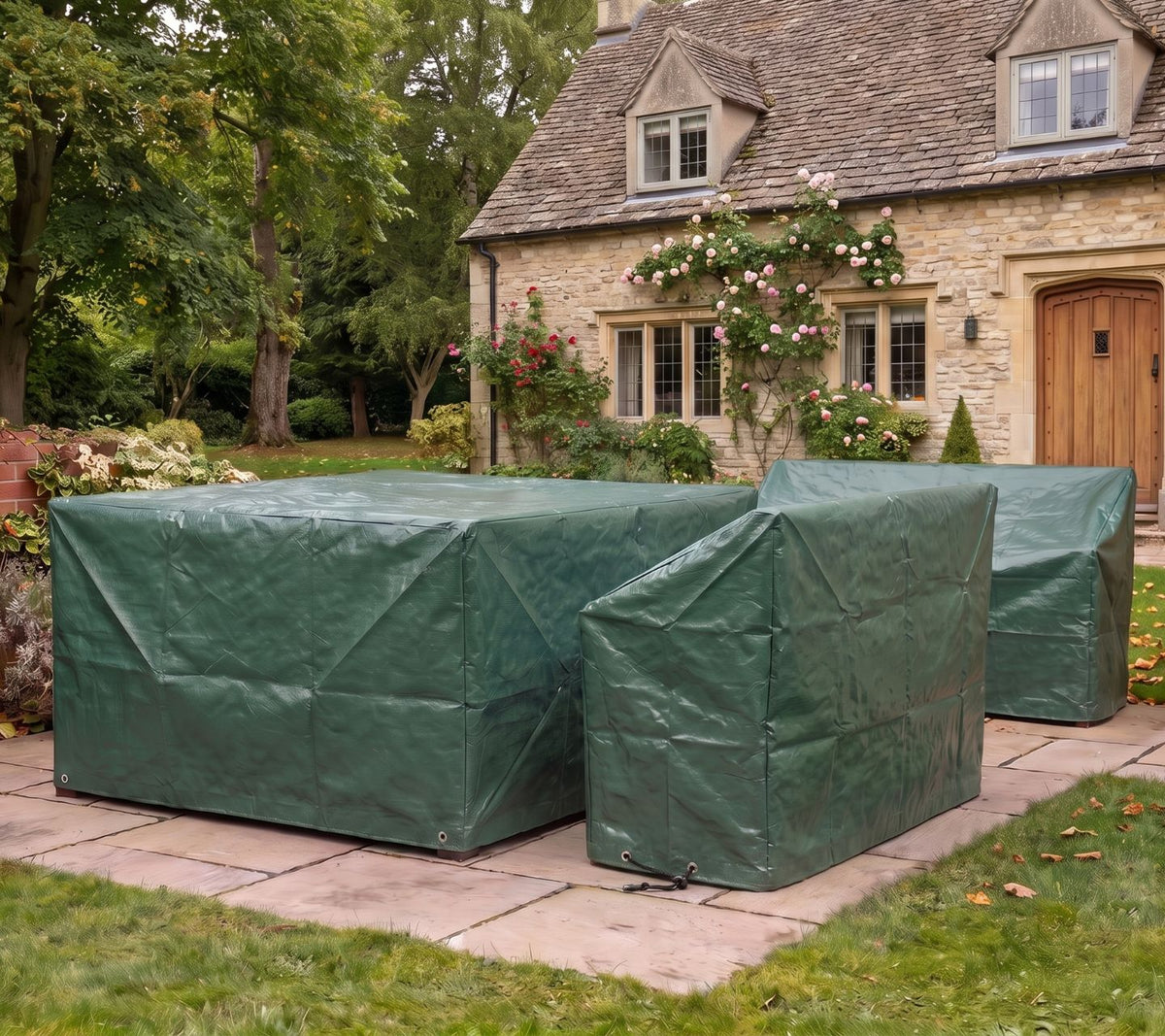
The material makes more difference than most people realise. The Keplin outdoor furniture covers are made from woven polyethylene fabric with waterproof and tear-resistant construction throughout the range. UV protection is built in to resist sun fading, cracking and discolouration and the windproof fastening system with brass eyelets and adjustable tie cords keeps the cover anchored even in strong gusts. That last detail matters more than it sounds. A cover that blows off at 2am in October isn't protecting anything.
Breathability matters as much as waterproofing. A cover that's fully waterproof but not breathable can trap moisture underneath rather than letting it escape. After a month of autumn nights, the underside of a poorly made cover is wet and the furniture underneath has been cycling through damp and dry repeatedly. That's how mould takes hold. A purpose-made cover with proper construction prevents this.
A heavy-duty tarpaulin is genuinely useful for covering awkwardly shaped equipment, firewood or a stack of garden tools, but it's not the best long-term solution for furniture. Wind catches the edges, creates gaps and rain gets underneath. The Keplin Heavy Duty Waterproof Tarpaulin is worth having in the shed as a versatile workhorse, just not as a substitute for a shaped furniture cover.
Step 4: Measure Before You Buy

A cover that's too small leaves parts of the furniture exposed. One that's too large pools water on top rather than shedding it, which puts sustained moisture pressure on whatever's underneath.
The Keplin Large Waterproof Garden Furniture Cover at 180cm suits most dining sets and larger corner sofa setups. The Small Waterproof Garden Furniture Cover at 125cm is the right fit for compact bistro sets, individual chairs and smaller occasional tables. For benches, the Keplin 3 Seat Garden Bench Cover and Garden Chair Cover are shaped to fit rather than being scaled-down versions of a larger cover, which makes a real difference to how securely they sit.
One tip worth knowing: wherever possible, create a peak or ridge in the cover rather than leaving it flat across a horizontal surface. Water sitting in a pool on top of a flat cover is one of the most common causes of cover failure over time. If your furniture doesn't naturally create a peak, a folded towel underneath the cover in the centre does the job.
Step 5: Decide What Goes in The Shed
Not everything needs to come indoors and trying to bring everything inside usually means nothing gets done properly. Here's a practical breakdown.
- Cushions, always. Fabric and foam hold moisture and are the most vulnerable to mould, mildew and pests. This applies regardless of what material your furniture frames are made from. Get them inside.
- Lightweight folding chairs and small bistro sets are worth bringing in if you have the space. Anything with an aluminium or powder-coated steel frame that stacks easily is worth the effort. Inside storage is always better than covered outdoor storage if space allows.
- Heavy dining sets, rattan corner sofas and anything too large or cumbersome to move can be covered and left outside. A quality cover on a well-cleaned, dry piece of furniture in a sheltered position will see it through to spring in good condition. Stack chairs where possible to reduce the number of covers you need.
One thing to flag about sheds: if yours has any sign of rodent activity, it's not a reliable option for cushions or upholstered pieces. Mice nest in cushion fills and are particularly active in early autumn. A dry garage or indoor cupboard is the safer choice for anything fabric.
Conclusion: Before the Leaves Fall
The garden doesn't need much from you at this time of year. A couple of hours on a dry afternoon in late September, everything cleaned and covered properly, cushions somewhere dry and warm. Do it once and it's done until spring. Pull the covers off in April and everything should be exactly as you left it, ready to go as soon as the weather gives you a reason to be outside again.
Explore the full outdoor furniture covers and accessories range at Keplin for covers sized to suit everything from a single chair to a large dining set.


