 Free Standard Shipping
 Pay Later with Klarna
 30-Day Easy Returns
 Good Housekeeping Award Winner




Now that spring has sprung, it's time again to take a closer look at your balcony: is this the year you will turn it into your own little garden? Because balconies really are one of the most underused spaces in your average UK home. A few square metres of fresh air, (often) decent light and the persistent feeling that something could and should be growing there. Yet, for most of us, it's where the recycling goes or bikes hibernate over winter. The good news is that growing plants in a small outdoor space is less complicated than the gardening world would make you believe. You don't need a Chelsea Flower Show budget or a degree in horticulture to succeed: the right containers, a few decent gardening accessories and a plan that actually suits the space you've got is crucial.
Start with What You've Got
Not all balconies are created equal - it may sound harsh but it's true because certain plants, whether flowers or vegetables, simply won't grow in certain conditions. So before you buy anything, spend five minutes on your balcony with an honest eye and open mind. Does it get any direct sunlight? Is it sheltered or open to the elements? A sun-hungry tomato plant on a north-facing balcony isn't a project but a slow-motion disappointment in the making. Most UK balconies get a mix of sun and shade, which is usually fine. The practical starting point then isn't "what do I want to grow?" but "what will actually grow here?"
Choosing the Right Containers for Balcony Gardening
Containers are the foundation of balcony gardening. The most common mistakes made by amateur planters is going too small. Bigger pots can hold more compost, retain moisture longer and give roots space to develop, which means less watering, more resilience and better results. Outdoor plant pots come in all shapes and sizes and for a balcony you want to think in terms of groupings: a couple of larger containers for statement plants or vegetables whilst using smaller ones for herbs or trailing plants.
Whatever you're planting, though, drainage matters as pots without holes will waterlog and kill most things outdoors. Check before you buy new ones and if you're repurposing containers, just drill a few holes in the base. For upper floors, lightweight plastic pots are a sensible call: they no longer look as old and musty as they used to and won't create structural concerns once filled with wet compost. Keplin's range of biodegradable outdoor plant pots covers all sizes.
What to Grow on a Balcony: From Herbs to Salad Leaves
Herbs: The Highest-Return Balcony Plant, Without A Doubt
Basil, mint, rosemary, chives or parsley: all of these grow well in containers, all of them are very welcome kitchen guests and none of them require much more than a reasonable amount of sun and a watering can. Mint is one of very few that will actually need its own pot or it will colonise everything else within a season. This is not a metaphor. Mint is genuinely territorial.
Salad Leaves and Compact Vegetables: Fast Results, Small Pots
Lettuce, rocket, spinach and radishes all do well in balcony containers and also grow fast enough to feel rewarding within only a few weeks. Nothing better than having your own grown salad with a glass of white on a sunny summer's eve. Cherry tomatoes and dwarf courgettes are also achievable on a sunny balcony in reasonably large pots, but they need daily watering in summer, because containers dry out faster than you'd expect.
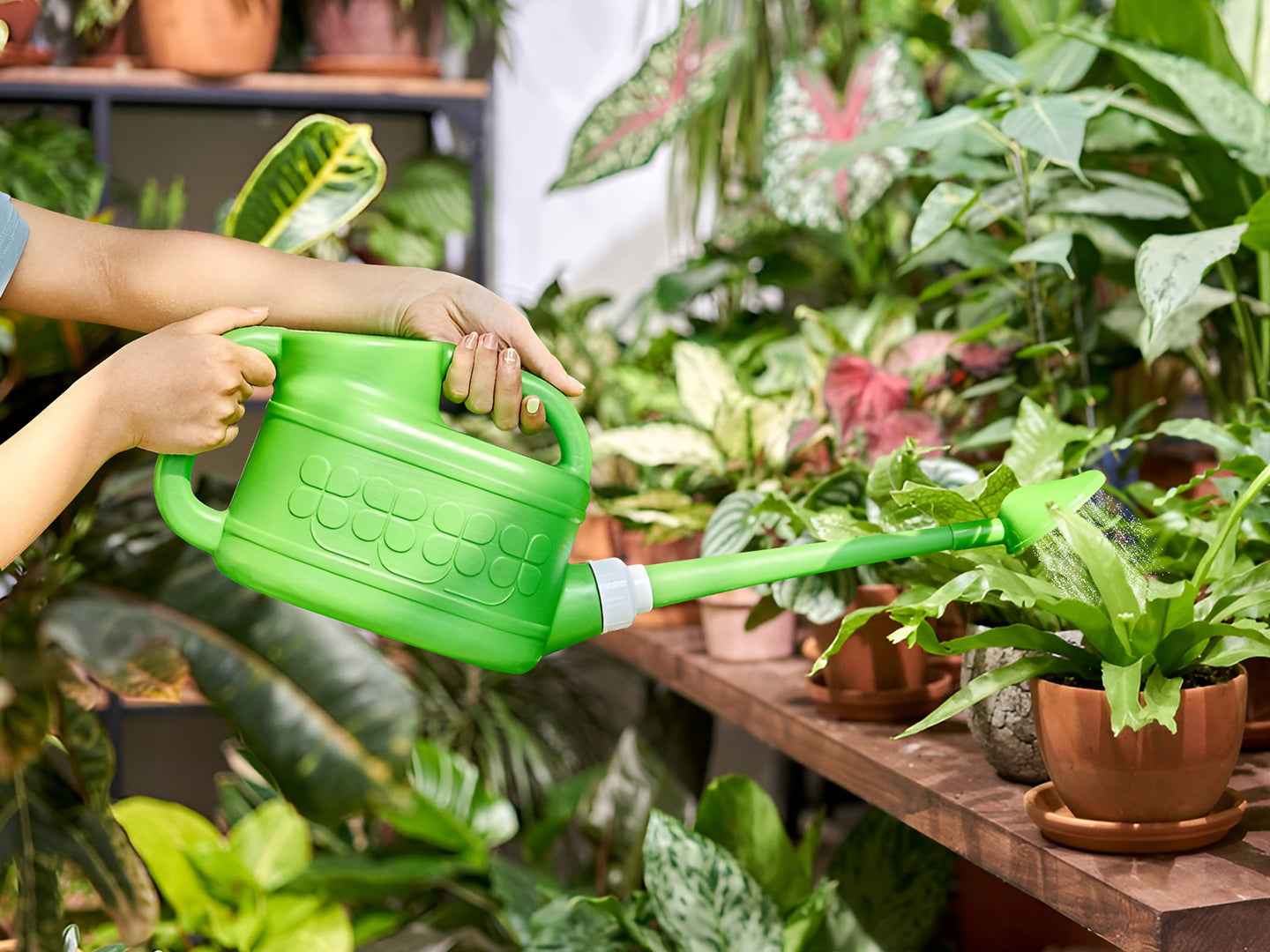
Hence, a good watering can with a fine rose head is worth having from the start to up your chances at success. it makes a real difference to seedlings and delicate plants that would otherwise get flattened by a direct pour. For a balcony setup, a 5-8 litre hits the sweet spot: large enough to cover everything in one go, small enough to carry comfortably up a flight of stairs.
Balcony Garden Maintenance: The Honest Day-to-Day Reality
The single biggest maintenance issue on a balcony garden is watering. Containers dry out quickly, especially during longer hot spells and proper heatwaves, some pots need water twice a day. The honest answer is that it requires a daily check-in during growing season. It takes two minutes. It's also, if you're that way inclined, genuinely pleasant.

Weeds and Unwanted Growth
Container gardens get fewer weeds than on the open ground, but not zero. If you're using a base layer on the balcony floor, whether gravel, bark chips or similar, a weed membrane underneath will keep things tidy and save you hours of pulling throughout the months.
Protecting Your Hands: Why Garden Gloves Are Worth It

Apropos of pulling weeds: repotting, pruning and general balcony maintenance can be harder on your hands than you might imagine. A decent pair of garden gloves will therefore make the difference between a pleasant half-hour experience and a broken nail situation. Waterproof gardening gloves are the most practical option for container work as they wash clean easily and can be used frequently without much wear-and-tear.
Balcony Gardening Tools: What You Actually Need

You won't need much apart from a hand trowel, a small rake for loosening compost and something to sweep up behind you. Keplin's gardening tools cover the essentials without requiring a shed to store them.
The Bottom Line: A Small Balcony Is Enough to Get Started
A balcony garden doesn't need to be something spectacular to be worth having. A few good containers, a decent watering can, some compost and a nice selection of plants can turn your uninspired concrete into something you want to spend time near. The full Keplin gardening accessories range has everything you need to get started, from plant pots and garden gloves to weed membranes and gardening tools. Free standard shipping of course. The balcony's been waiting long enough.


